
What people keep asking
- Will exercise wear my knees out faster?
- What exercise made the biggest difference for your knees?
- Why does standing still hurt more than walking?
- Stronger thigh muscles won't change what is going on inside the joint, will they?
- How much pain is okay while I work out?
Questions like these come up again and again in public knee pain groups. We put them in our own words.
Will moving wear your knees out faster?
For most people, no. The research so far says knee exercise does not damage cartilage.
The old idea was simple: a knee is like a tire, and every mile wears down the tread. So people with sore knees stop walking, skip the stairs and sit more. It sounds sensible, but it is not how cartilage works.
Cartilage, the smooth cushion at the ends of your bones, has no blood vessels. It gets its nourishment from the fluid inside the joint, and movement helps push that fluid in and out, a bit like squeezing a sponge. A joint that barely moves is not being protected. It is being starved.
A 2019 review pulled together nine trials that scanned people's knees before and after exercise programs. Most found no change in cartilage thickness or volume, and the researchers concluded that knee loading exercise does not seem to be harmful for cartilage in people with, or at risk of, knee osteoarthritis. The evidence is still thin, so scientists keep studying it, but nothing so far supports the idea that sensible exercise wears knees out.
What does exercise actually do for knee pain?
It probably eases pain and makes everyday movement easier. The change is modest on average, and it adds up.
In 2024, the Cochrane Collaboration, a group known for strict, independent reviews, looked at 139 trials with 12,468 people who had knee osteoarthritis. Their conclusion: exercise probably improves pain, physical function and quality of life, at least in the short term. It also did not seem to make people drop out more often or cause more harm.
The American College of Rheumatology and the Arthritis Foundation give exercise their strongest recommendation for knee osteoarthritis. It sits in the same top group as losing weight for people who are overweight, tai chi, and using a cane.
Be honest with yourself about what to expect. On average the drop in pain is real but not dramatic, and it only lasts while you keep going. Exercise is not a one time fix. It is more like brushing your teeth.
Why standing still can hurt more than walking
In knee pain groups, one comment comes up again and again: standing in one spot is the worst, but walking is fine. Others say the first steps after sitting, or after getting out of bed, are the hardest, and the knee loosens up once it gets going.
That fits how a stiff joint behaves. After a while without moving, the joint feels tight and creaky. Gentle movement warms it up. This is why many people find that a little movement often through the day works better than one long session followed by hours in a chair.
It is also why people in those groups so often say the hardest part was starting. The first week or two can feel worse before it feels better, which is when most people quit.
Which exercises help knees most?
There is no single magic move. The ones with the best track record build the muscles around the knee and keep it moving without pounding it.
Your thigh muscles, especially the big muscle on the front of the thigh, act like shock absorbers for the knee. When they are weak, the joint takes more of the load. Hip muscles matter too, because they keep the knee lined up as you walk and climb stairs.
Here are simple places to start. Do them slowly, with something sturdy nearby to hold:
- Sit to stand. From a firm chair, stand up and sit back down slowly, 5 to 10 times. Use your hands at first if you need to.
- Straight leg raise. Lie on your back with one knee bent. Tighten the front of the other thigh, lift the straight leg to the height of the bent knee, pause, and lower it slowly.
- Step ups. On the bottom stair, with a hand on the rail, step up and back down slowly, 5 to 10 times on each side.
- Easy cardio. A short walk or 8 to 10 minutes on an exercise bike at an easy pace. Water walking is kind to knees if you have a pool nearby.
- Balance. Stand on one leg next to a kitchen counter for up to 30 seconds, holding on lightly.
How much pain is okay?
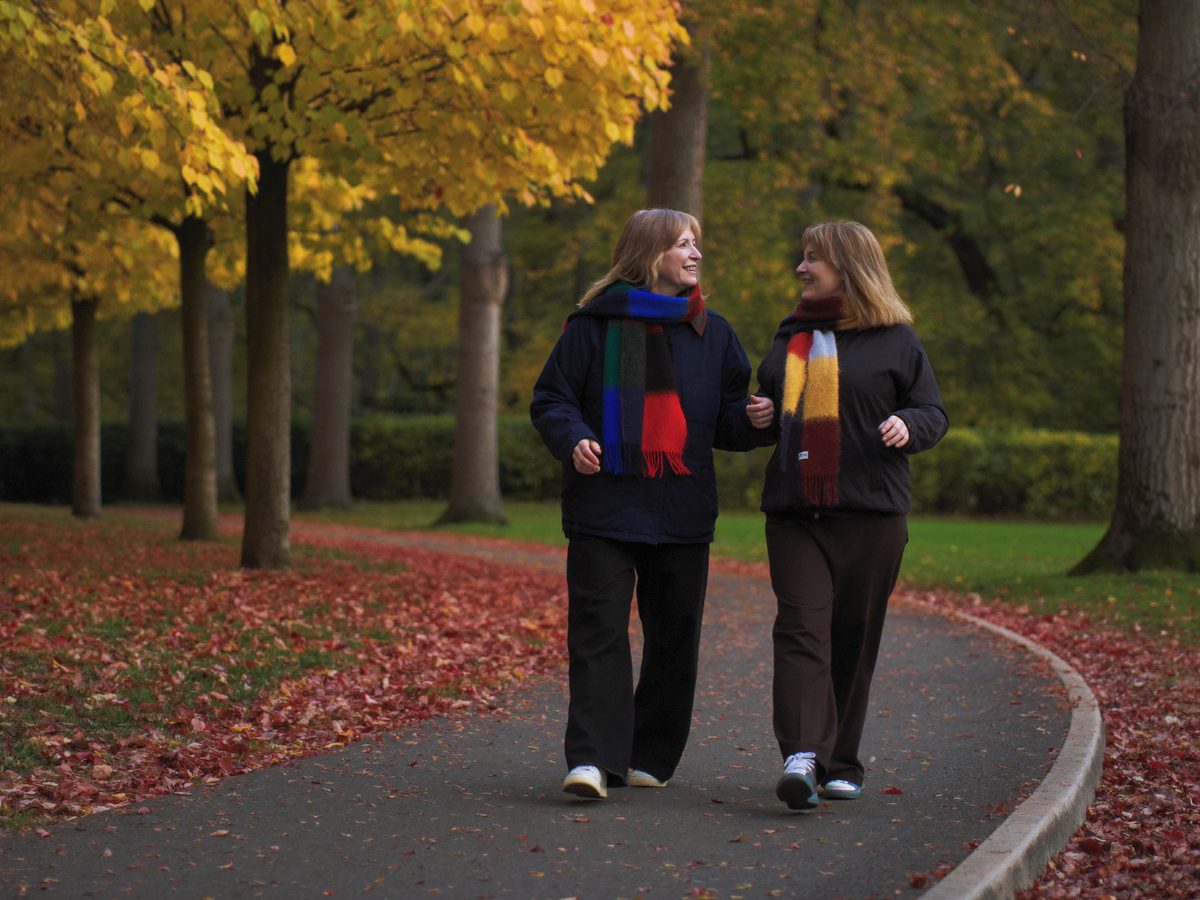
Mild aching while you move is common and usually fine. What matters is how the knee feels the next day.
A simple check many people find useful: if the knee feels no worse the next morning and is not more swollen, the amount you did was okay. If it is worse the next day, do a little less next time. Cut back, do not stop.
Sharp pain during a movement is a sign to change it. Make the movement smaller, slower, or swap it for something gentler, like the bike instead of the stairs.
Go up slowly. Add a few more repetitions or a few more minutes each week, not each day.
How to start this week
Pick two strength moves from the list and one easy cardio choice. Do them for about 10 minutes, most days. Write down how the knee feels the next morning. After two weeks, add a little.
If you can, see a physical therapist once or twice. They can check how your knee moves and give you a plan that fits it, which makes it much easier to stick with.
And know when to stop and get checked. See a doctor soon if the knee becomes hot, red or very swollen, if you cannot put weight on it, if it locks or gives way, or if the pain is new and severe.
What is going on inside your knees?
The 2 Minute Joint Check asks 12 quick questions about where it hurts, when it hurts and what you have tried. By the end you will know what the cushion inside your joints is made of, and whether what is in your cupboard can reach it.
Take the 2 minute joint check12 quick questions. Free. About 2 minutes.
Sources
- Lawford BJ et al. Exercise for osteoarthritis of the knee. Cochrane Database of Systematic Reviews, 2024.
- Kolasinski SL et al. 2019 American College of Rheumatology/Arthritis Foundation Guideline for the Management of Osteoarthritis of the Hand, Hip, and Knee. Arthritis Care & Research, 2020.
- Bricca A et al. Impact of exercise on articular cartilage in people at risk of, or with established, knee osteoarthritis: a systematic review of randomised controlled trials. British Journal of Sports Medicine, 2019.
- Lugo JP et al. Efficacy and tolerability of an undenatured type II collagen supplement in modulating knee osteoarthritis symptoms. Nutrition Journal, 2016.
This article is for education, not medical advice, and it does not replace a visit to your doctor. See a doctor soon if knee pain is new and severe, if the knee is hot, red or very swollen, if you have a fever, or if it gives way or locks. These statements have not been evaluated by the Food and Drug Administration. Our products are not intended to diagnose, treat, cure or prevent any disease.